Show up at Pelican Bay Community Park ready to play, and the first question isn't which paddle to bring. It's which of the twenty courts you're actually allowed to use, and at what hour. That question has an answer, and the answer is more interesting than "pickleball finally arrived." The courts you're standing on are the visible half of a deal that took a decade to close, and the invisible half is poured into a concrete wall, wrapped around a 10-foot fence, and floating in a pond as two new fountains.
A Park Built to Pay for Density, Not to Play On
The 15-acre park on Vanderbilt Beach Road did not start as a recreation project. Pelican Bay's developer, WCI, deeded the land to Collier County back in 1994 as part of an arrangement that let the company build more densely inside the 6,500-home community. The park came with strings attached from the start: the county owns it, the county sets the rules, and Pelican Bay residents have never had exclusive claim to it, even though it sits close enough to feel like part of the neighborhood.
For most of the three decades since, that distinction didn't matter much. The park had tennis courts and a playground, and it hadn't been meaningfully updated. Then pickleball happened, and the people who wanted to play ran into a wall long before the Foundation built a real one. Racquetball courts got repurposed as makeshift pickleball courts, and players who wanted real ones had to drive to Veterans Community Park or East Naples Community Park instead.
The Neighbors Said No Inside Pelican Bay, So the Fight Moved to the County Park
Here's the part that rarely makes it into the announcement: the Pelican Bay Foundation tried to build pickleball courts inside the community first. Neighbors objected, and the plan died. Only after that failure did the Foundation turn its attention to the county-owned park, a shift that started roughly four years before construction finally broke ground.
Even that path wasn't quick. Nearly a decade before the courts opened, the Foundation offered to buy the park outright from Collier County. The county said no. What eventually happened instead was a negotiated partnership: the Foundation would pay for everything, the county would keep ownership, and the two sides would share the result. In April 2024 the Foundation took over tennis court concessions and management from the previous vendor, and commissioners formalized a 30-year land lease that August. Four months later, on December 6, 2024, about 100 pickleball and tennis players showed up for a groundbreaking ceremony, and construction started that Monday.
The Rule That Splits Every Court in Half
The number that actually governs your Tuesday morning game is this one. On February 13, 2024, the Pelican Bay Foundation and the Collier County Board of County Commissioners approved an amendment that reads, in part:
"No more than 50% of the pickleball courts shall be for usage by members of the Foundation."
That single sentence is why ten of the twenty new pickleball courts operate as public open play, available to anyone who buys a park membership, while the other ten are reserved for Pelican Bay residents and Foundation guests during the same hours. The Foundation paid for the entire buildout. The public gets half the benefit anyway, because the land underneath it was never fully theirs to control.
Tennis works on a similar split, though the numbers run differently. A handful of courts near the clubhouse are set aside for Pelican Bay members, while the remaining courts are open to any park member, resident or not.
Why There's a Wall and Two Fountains
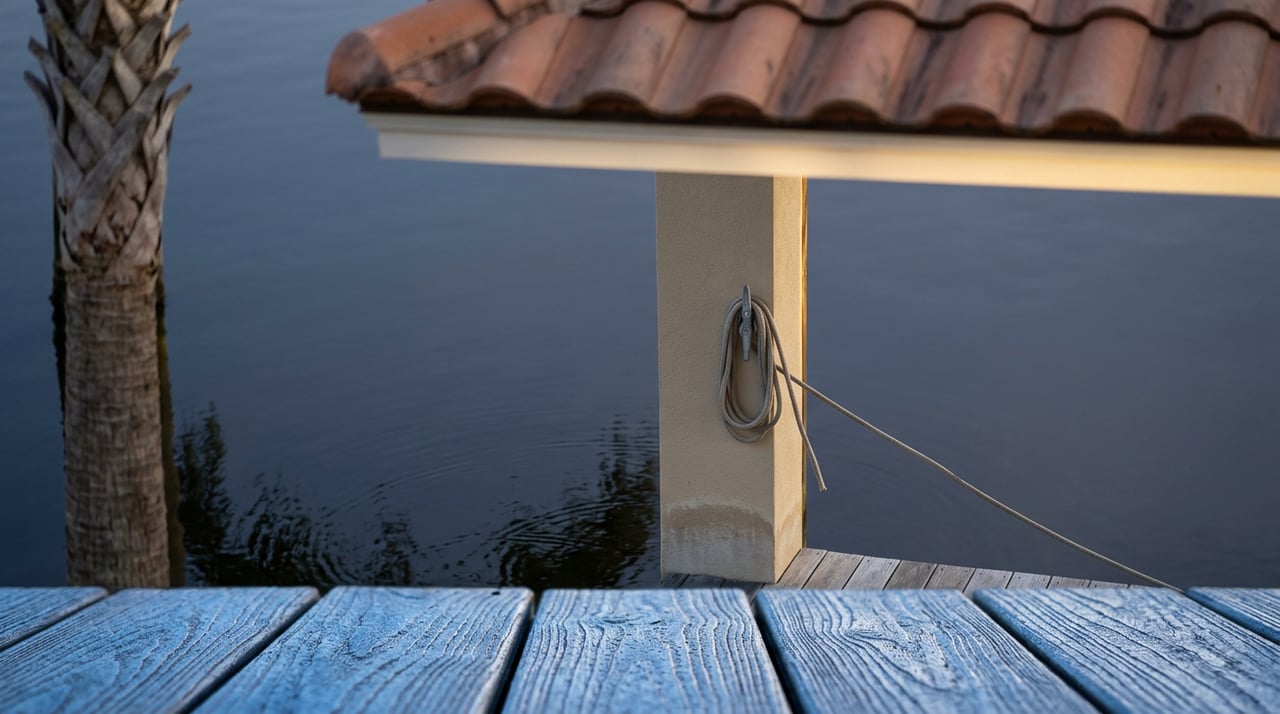
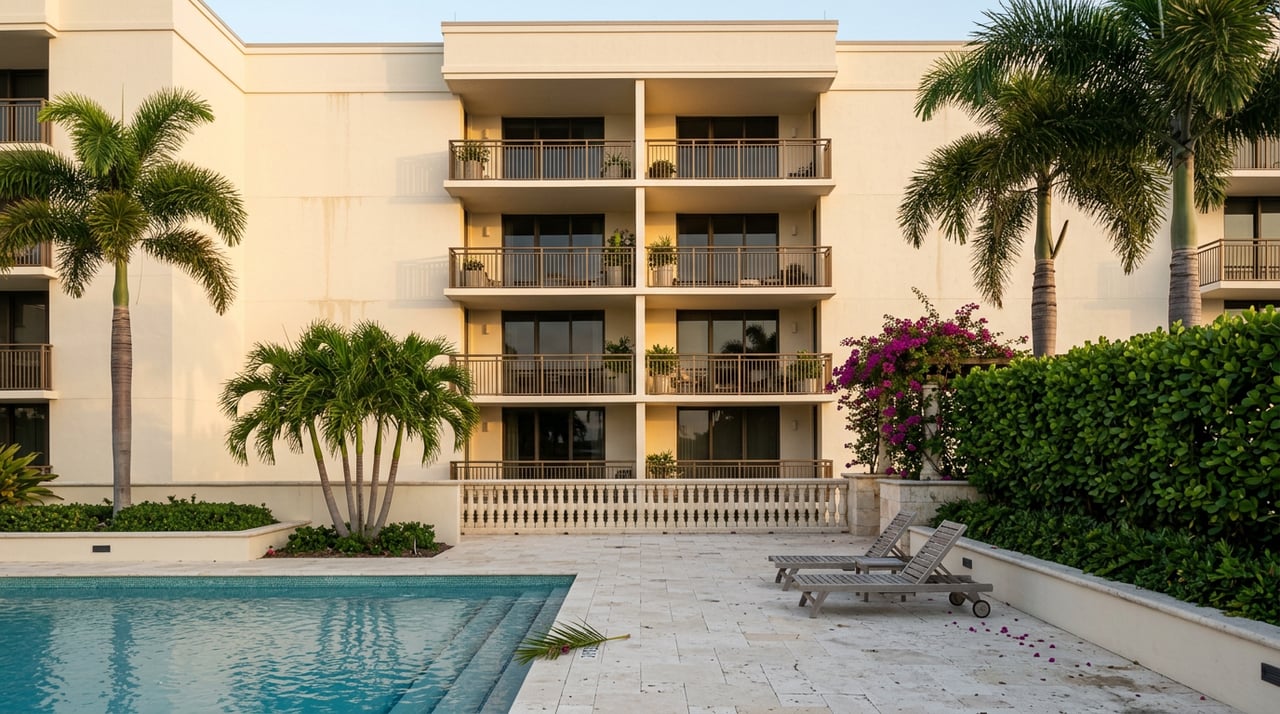
The other cost of building on shared land is that your immediate neighbors get a say, and in this case the neighbors were two condo buildings sitting close enough to hear every paddle strike. A sound study commissioned during planning led to a specific set of fixes: a concrete wall between the pickleball courts and the old softball and soccer field, built to protect the Avalon condominiums, and two new fountains added to the pond between the park and the Breakwater condos, intended to mask court noise with the sound of moving water. A separate 12-foot concrete wall went up around the parking lot, and a 10-foot perimeter fence was later wrapped in sound-mitigation insulation as one of the last steps before the facility reopened.
Collier County confirmed in its park update that the sound-mitigation system is now finished and the facility is open again for both pickleball and tennis. Getting there took longer than planned. The Foundation's president, Tony D'Errico, told county commissioners in October 2025 that the design process had run well past the original timeline, and that the goal was to break ground in December and have people playing by June. The project ultimately cost more than first estimated too. The Foundation initially budgeted $6 million for the work; by the time the finished courts were announced, that figure had grown to $7 million, still fully covered by the Foundation rather than county taxpayers.
What You're Actually Playing On, and Who's Teaching You
The finished facility includes 20 Novacrylic pickleball courts and 8 sub-irrigated hydro-grid tennis courts, the latter a mix of refurbished Har-Tru clay and two brand-new courts built where the old racquetball and handball courts used to sit. Parking grew from whatever the aging lot could hold to 109 spaces, a small but telling sign of how much demand the Foundation expects.
The teaching roster is worth knowing by name if you're planning to book a lesson. Evan "Dino" Dinopoulos, who played college tennis at Wittenberg University before moving into pickleball full time, holds ITPTA, PPR, RPO, and DUPR coaching credentials and has competed in pro-level main draws. Coach Melissa has spent three years building a client base that includes players from across the country and is certified to evaluate and rate players up to the 4.5 level. Steve brings more than 42 years of coaching experience from premier indoor facilities and yacht clubs in Connecticut, with certifications spanning tennis, platform tennis, and pickleball. The facility's staff also includes former PPA, MLP, and APP pro pickleball champion Michelle Esquivel and USTA and USPTA certified instructor Tatiana Batalla. On the programming side, the Foundation brought in Ben and Collin Johns, both top pickleball players, to design the curriculum. Racquets director Maury Bozman has said the plan includes more than 40 different programs, from tournaments to clinics to casual events.
What It Costs to Actually Play
Booking a court means creating an account in the Pelican Bay Pod Play app, the third-party system used for reservations, open play, lessons, and clinics across the facility. Everyone needs to reserve in advance, and proof of residency determines which membership tier applies.
- Annual pickleball membership was set at $95 for Collier County residents and $125.40 for non-residents when the fee schedule was proposed, with a $10 daily drop-in fee for occasional players.
- Annual tennis membership was proposed at $477 for county residents and $632 for non-residents.
- Pickleball courts are open daily from 8 a.m. to dusk, while tennis courts run daily from 8:30 a.m. to 9 p.m.
Those numbers matter more than they might seem to at first glance, because they set the actual cost of the neighborhood's newest amenity against what residents assumed a private Foundation project would look like. This isn't a members-only club built inside Pelican Bay's private boundaries. It's a county park the Foundation paid to rebuild, on terms the county wrote.
The Takeaway for Anyone Walking Onto These Courts
Pelican Bay residents have spent years hearing that pickleball courts were coming. What most of that conversation skipped is why it took so long, why the courts split exactly in half, and why a concrete wall and two fountains had to go up before anyone could serve a ball. The park's 1994 origin as a density trade, the failed attempt to build inside Pelican Bay itself, the county's refusal to sell, and the sound study that reshaped the pond next door all show up in the finished facility whether you notice them or not.
Next time you're at the net waiting for the challenge court to open up, look past the fence line toward the Breakwater pond. The fountains running out there aren't decoration. They're the last visible piece of a compromise that took the better part of a decade to finish.
If you're weighing what it actually means to live inside a community with amenities like these, split rights, shared parks, and Foundation dues that fund more than they control, that's exactly the kind of detail worth talking through with someone who follows Pelican Bay closely. Roddy Luxury Group has spent years tracking how neighborhoods like this one actually work day to day, not just what the listing says. Reach out any time you want a straight answer about what living here really involves.