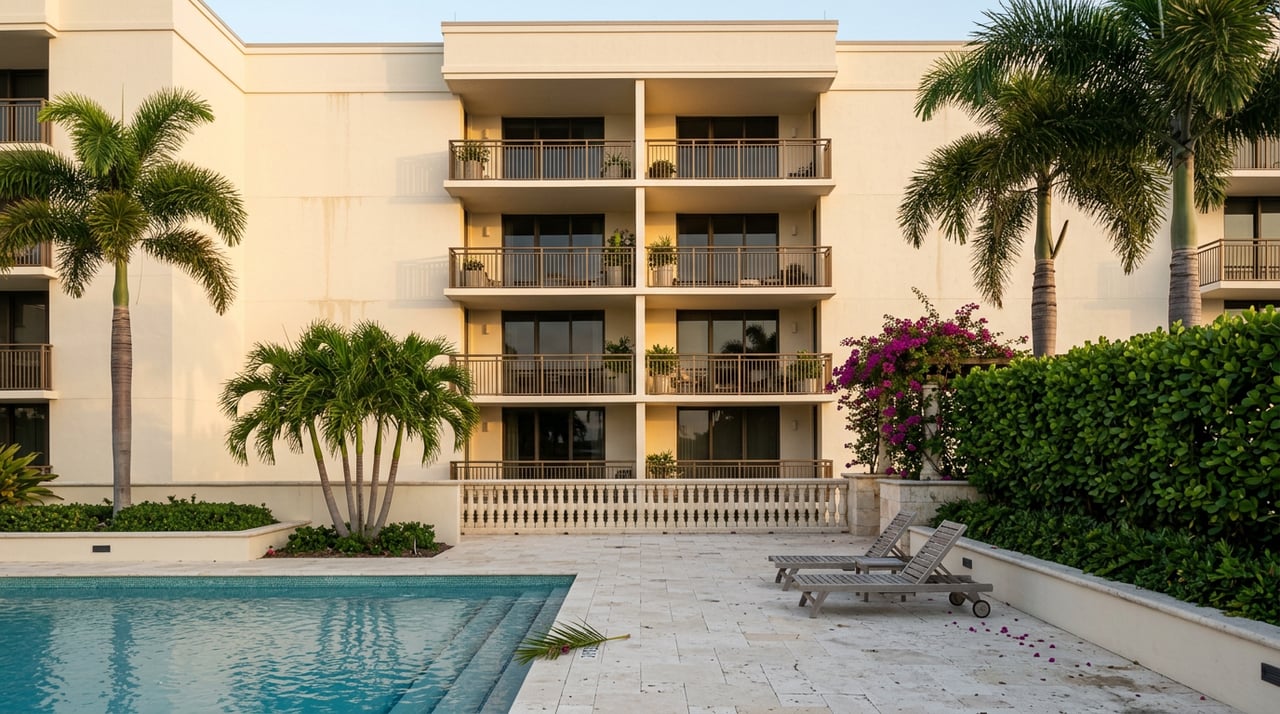
On March 24, 2026, a three-bedroom residence at Merida, on the southwestern tip of Marco Island, closed for $4,500,000. Five weeks later, on April 29, a four-bedroom unit at Cozumel, inside the same gated complex, closed for $3,700,000. Run the math on square footage and the gap gets more interesting: the Merida sale worked out to roughly $2,560 per square foot, the Cozumel sale to closer to $1,120. Same address. Same six-tower community. Same season. Two very different numbers.
Both units carry the same "Cape Marco" name on the listing sheet, and that is exactly the problem for anyone shopping this stretch of beachfront. Cape Marco is not one building with one price tendency. It is six separate towers, raised across roughly a decade, each with its own certificate of occupancy, its own age, and its own place on a Florida regulatory clock that has nothing to do with view or finish level and everything to do with when the concrete was poured.
Six Towers, Six Different Birthdays
Belize, Cozumel, Merida, Monterrey, Tampico, and Veracruz share a gate and a beach, but they do not share a build date. Cozumel went up in 1998, a 24-story tower with 120 residences. Veracruz followed in 2005, the newest of the six, with roughly 120 units spread across 25 floors. Merida is the oldest structure on the property by a wide margin. It existed before Cape Marco was conceived as a development and was later absorbed into the gated community that grew up around it, which makes it the building with the longest regulatory runway already behind it, regardless of what year gets attached to the others.
The towers do not even share a coastline position. Tampico, Veracruz, and Cozumel sit beachfront. Belize is partially beachfront, anchoring the tip of the peninsula with views toward the Ten Thousand Islands and Caxambas Pass. Monterrey and Merida face Caxambas Pass and are gulf front rather than directly on the sand. Tampico picked up a bit of national notoriety when former House Speaker John Boehner purchased a unit there, but the building's real relevance to a buyer has nothing to do with who else lives in it and everything to do with when its clock started running.
That timeline can help buyers compare otherwise similar listings.
The Twenty-Five-Year Trigger and the List Price
Florida Statute 553.899, passed in the wake of the 2021 Champlain Towers South collapse in Surfside, requires every residential condominium building three stories or taller to undergo a milestone structural inspection once it reaches 30 years of age from its certificate of occupancy date, or 25 years if the local building department has determined that coastal proximity warrants the earlier trigger. Many South Florida coastal jurisdictions have kept that 25-year threshold in place. The Florida Department of Business and Professional Regulation maintains the current statewide framework, including the companion Structural Integrity Reserve Study, or SIRS, that buildings subject to the law must complete on the same recurring cycle.
Run that 25-year math against Cape Marco's towers and the picture sharpens considerably. Cozumel, built in 1998, would already be several years past a 25-year coastal trigger if that standard applies to its building department, meaning the tower should have a completed milestone inspection and SIRS on file by now. Veracruz, built in 2005, has more room before it faces the same requirement, whether the threshold lands at 25 years or 30. Merida, the oldest structure on the peninsula, has been sitting on this clock the longest of any of the six.
The financial part matters as much as the structural part. Ben Laube Homes notes that as of January 1, 2025, associations subject to the SIRS requirement can no longer let unit owners vote to waive or reduce reserve funding for the nine structural components the law covers: roof, load-bearing walls, floor, foundation, fireproofing, plumbing, electrical systems, waterproofing and exterior painting, and windows and exterior doors. For decades, Florida condo boards routinely voted to keep those reserves low to hold down monthly dues. That option is gone for the components SIRS covers. An older tower that spent years underfunding its reserves under the old rules is now required to close that gap, and the money for it comes from somewhere: either a steady climb in HOA dues or a special assessment landing on current owners.
Those reserve obligations can make two otherwise similar units carry very different ownership costs.
What This Means If You're Comparing Two Units
A buyer who puts a Cozumel listing next to a Veracruz listing and compares only square footage and asking price is comparing two towers that sit in different places on this same statutory timeline. The building's age is not a cosmetic detail. It is a leading indicator of what the reserve conversation looks like inside that association right now.
Before writing an offer on any Cape Marco unit, or any coastal Marco Island condominium built more than two decades ago, it is worth asking the association for three specific documents rather than relying on the listing description:
- The building's most recent milestone inspection report, including whether it advanced to a Phase 2 structural evaluation
- The current Structural Integrity Reserve Study, with the funding percentage for each of the nine covered components
- Board minutes or a funding plan addressing any gap between current reserves and the SIRS-recommended contribution schedule
David Liberatore explains that the Florida Condominium Act gives a buyer three business days to review condominium documents once they are received, though the inspection period negotiated into most contracts typically runs ten to fifteen days. That window is enough time to have these documents reviewed properly. It is not enough time to discover, after closing, that a special assessment vote is already scheduled for the following quarter.
Why the Citywide Median Doesn't Help You Here
Marco Island's citywide condo median sat at roughly $862,500 as of May 2026, and the broader condo segment across the island has been taking noticeably longer to sell than single-family homes this year, with elevated inventory giving buyers more room to negotiate. Those are useful numbers for the island as a whole. They are close to useless for evaluating Cape Marco specifically.
Cape Marco's closed sales this year run several multiples above that citywide figure, and the real spread within the complex has less to do with the softening condo market islandwide and more to do with which of the six towers a unit sits in, what floor it occupies, and where that building stands relative to its own inspection and reserve timeline. A buyer using the citywide median as a benchmark for a Cozumel or Merida unit is measuring against the wrong yardstick entirely.
The two closings that opened this piece, Merida at $4.5 million in March and Cozumel at $3.7 million in April, both moved inside a market that headlines describe as slow. Neither sale was slow, and neither buyer was purchasing a commodity. They were purchasing a specific tower, at a specific point in its structural life, and the smart ones asked to see the paperwork before they asked to see the view.
Frequently Asked Questions
Are all six Cape Marco towers technically beachfront? No. Tampico, Veracruz, and Cozumel sit directly on the beach. Belize is partially beachfront at the tip of the peninsula. Monterrey and Merida face Caxambas Pass and are gulf front rather than beachfront.
Does buying the newest tower, Veracruz, mean I avoid the milestone inspection issue entirely? It delays it rather than avoiding it. Veracruz, built in 2005, has more time before it reaches a 25 or 30 year trigger than Cozumel or Merida, but every tower three stories or taller in Florida eventually faces this requirement.
Where can I read the actual state law rather than a summary of it? The full text of Florida Statute 553.899 is available through the Florida Legislature's official statutes database.
Cape Marco rewards a buyer who reads past the view and into the paperwork. If you are comparing towers, comparing a coastal Marco Island condo against a mainland option, or trying to make sense of why two units at the same address are priced so differently, The Roddy Luxury Group has spent a quarter century reading exactly this kind of fine print in Naples and Marco Island real estate. Reach out before you write the offer, not after.
This article is general information, not legal, tax or financial advice. Consult a qualified professional about your situation.