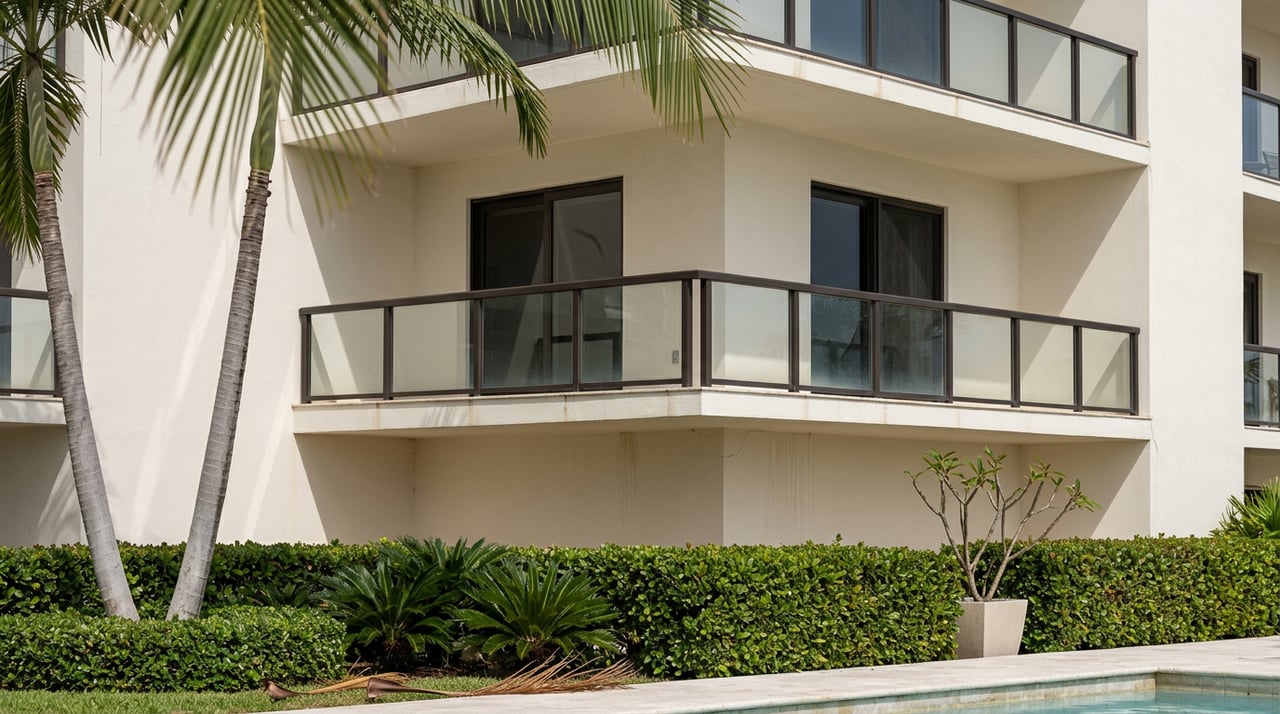
Two condos in Park Shore can carry the same asking price, the same square footage, even neighboring floor plans, and still represent very different financial commitments. The difference will not show up in the listing photos or the price-per-square-foot line the portals like to lead with. It shows up later, in the association's official records, and as of this year, Florida law has made those records matter more than they ever have.
That is the number worth understanding before you write an offer on a Park Shore high-rise this year: not the price on the listing, but the building's reserve position under the state's structural integrity reserve study rules. Two towers a few blocks apart, priced within a few thousand dollars of each other, can sit on opposite sides of that line.
Park Shore was never built in one era
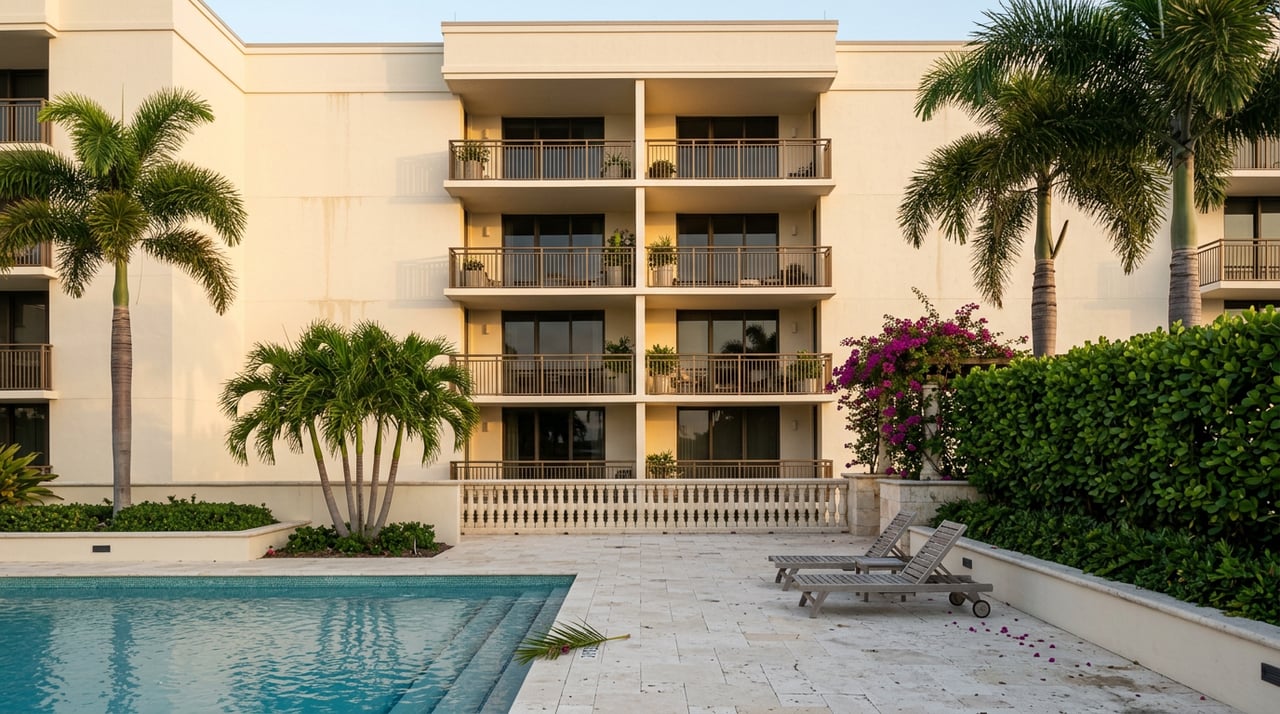
Part of what makes this comparison necessary is that Park Shore's high-rise inventory spans more than three decades of construction. Horizon House, the first beachfront condominium in the community, was completed in 1972. Allegro followed in 1981. Le Parc and Enclave both opened around 1990 and 1991. Brittany and Le Rivage arrived in 1996. Regent came in the early 2000s, and Aria, the newest beachfront tower, was finished in 2006.
That range matters because Florida's milestone inspection law ties a building's inspection schedule to its age, not to when the rule was written. Buildings within three miles of the coastline, which describes essentially all of Park Shore's beachfront towers, must complete a milestone inspection at 25 years of age and every 10 years after that. A tower built in 1972 is decades past that first threshold and has a long structural history to draw on. A tower built in 2006 only recently crossed the 25-year mark and is still building that record.
This means the reserve conversation in Park Shore is not the same conversation from building to building. Some associations have been managing structural reserves for decades and have a long track record to show a buyer. Others are handling their first mandatory structural review right as the funding rules around it have gotten stricter.
What changed on January 1, 2026
For years, Florida condo associations had a release valve. Even after the state introduced the structural integrity reserve study, known as a SIRS, in the wake of the 2021 Surfside collapse, owners could vote to waive or underfund the reserves the study called for. Boards used that option more often than regulators would have liked.
That option ran out on January 1, 2026. As of that date, associations can no longer waive or underfund the reserves identified in a completed SIRS for the eight structural components, roof, load-bearing structure, fireproofing and fire protection, plumbing, electrical systems, waterproofing and exterior painting, windows and exterior doors, and any other qualifying item over the state's cost threshold. Boards that had voted to waive those reserves under an older budget were required to begin funding them on the SIRS schedule this January regardless. If the study says the building needs to be setting aside a given amount each year, the budget now has to reflect it.
Most owner-controlled associations that existed on or before July 1, 2022 were required to complete their first SIRS by December 31, 2025. Associations with a milestone inspection due by the end of 2026 were permitted to complete both studies together, but no later than December 31, 2026. In practical terms, the industry's grace period on structural reserves ended this year, and the funding math that used to be optional is now a fixed line in the budget.
For a buyer, that is the shift that turns a building's paperwork into a pricing input. A completed SIRS with fully funded reserves tells you the building has already absorbed this cost into its budget. An incomplete or underfunded one tells you the cost is still coming, and it will likely land as a special assessment rather than a gradual increase in monthly dues.
What the gap actually looks like
The MLS listing for a unit at Vistas at Park Shore offers a useful, real example of what compliance looks like on paper. The association's disclosure states that Vistas has completed the state-required milestone inspection and structural integrity reserve study, and that because of what the listing describes as a disciplined approach to operations, maintenance, and reserve funding, no additional special assessment was needed to meet the SIRS recommendations. That is the outcome a buyer wants to see: the study completed, the funding already in place, no surprise bill waiting at the closing table or the year after.
Contrast that with what has happened elsewhere in Florida when reserves were left underfunded for too long. At The Cricket Club in North Miami, owners were hit with special assessments as high as $134,000 per unit in 2024. At Mediterranean Village in Aventura, some assessments reached $400,000. Those are not Park Shore buildings, and nothing in the research suggests Park Shore associations are in that position. But the range illustrates the scale of the gap between a building that funded its reserves on schedule and one that deferred the decision until the law removed the option to keep deferring it.
Public market trackers put Park Shore's median condo list price near $2 million in the first months of 2026, with homes typically spending roughly 12 to 13 weeks on market and selling close to full asking price. That median describes the sticker. It says nothing about which of the buildings behind those listings are funded like Vistas and which are still catching up.
What to ask for before you write an offer
Florida law already requires more disclosure than it used to. For sales contracts entered after December 31, 2024, sellers must disclose a condominium's milestone inspection and SIRS status to the buyer. Associations must also submit their completed SIRS electronically to the state within 45 days of completion, and that data is now visible to lenders and insurers, not just to the buyer who thinks to ask for it.
Before you make an offer on a Park Shore condo, request:
- The building's most recent milestone inspection report, or written confirmation that one is not yet due
- The completed structural integrity reserve study, including the funding schedule for each of the eight components
- The association's current reserve balance measured against that funding schedule
- Any special assessment history for the past five years, along with board minutes discussing pending capital projects
- Confirmation of when the building's next milestone inspection cycle falls due
A seller and their agent should be able to produce these without difficulty. If a listing agent hesitates or the documents are incomplete, treat that as information in itself.
The comparison that actually matters
Two Park Shore condos priced the same are not necessarily the same purchase. A 1990s tower with a funded SIRS and a clean assessment history is a different commitment than a similarly priced unit in a building still working through its first mandatory reserve study under the new no-waiver rule. Price per square foot tells you what the unit costs today. The building's reserve position tells you what it might cost you next year.
That is the read worth bringing to a Park Shore search in 2026: treat the association's paperwork as part of the price, not as a formality to review after you have already fallen for the view.
Frequently asked questions
Is a milestone inspection the same thing as a structural integrity reserve study? No. A milestone inspection is a visual and structural review performed by a licensed engineer or architect on a set age-based schedule. A SIRS is a separate study that projects the remaining useful life and replacement cost of the same structural components and sets a funding schedule to pay for them. Florida law allows the two to be completed together when their deadlines align, but they serve different purposes.
Does this apply to Park Shore's mid-rise and low-rise buildings too, or only the beachfront high-rises? The requirement applies to any condominium or cooperative building three or more habitable stories tall, regardless of whether it sits directly on the Gulf or along Venetian Bay. Single-family homes and properties governed under Florida's HOA statute rather than the condominium statute are not subject to the SIRS requirement.
If a building already passed a milestone inspection years ago, is it exempt from the SIRS rule? No. A past milestone inspection does not substitute for a SIRS unless it specifically meets the study's requirements, and the SIRS itself has to be updated at least every 10 years regardless of how the building performed on prior inspections. A long clean history is a good sign, but it does not remove the current funding requirement.
Where can I verify a specific building's compliance status myself? The Florida Department of Business and Professional Regulation maintains guidance and reporting requirements for SIRS compliance, and the City of Naples building department publishes the local milestone inspection process for buildings within its jurisdiction. Both are useful starting points before you rely solely on what a listing discloses.
Reading a Park Shore condo listing well now means reading two documents, the price sheet and the association's reserve study, side by side. If you are comparing towers along this stretch of coastline and want a second opinion on what a specific building's paperwork actually says, Darlene Roddy and the team at Park Shore know the buildings block by block. Contact us before you write the offer, not after.